Beeldleer scope note
Aestheticism was a late 19th-century art movement championing the principle of "art for art's sake," prioritizing beauty over moral or didactic functions. In contrast, a historical method in art uses the past to understand and analyze artworks, often linking them to specific eras or social contexts. While Aestheticism rejected art's role as historical evidence or a reflection of its age, a historical method inherently interprets art as a product of its time and culture. Afro-American painters Like Kerry James Marshall and Kehinde Wiley combine the aetheicism and historical methods to represent the beauty of the black body in a historical context to question its underrepresentation over time.
Kerry James Marshall's Beauty examined (1993) is based on Rembrandt van Rijn’s The anatomy lesson of Nicolaes Tulp. It makes part of another attempt to understand the meaning and perception of beauty, in particular in the portrayal of black people in the context of a predominantly white Western history of art and aesthetics. Anna Katz described this image, supported by the textual subscriptions on the painting, as follows: “Marshall’s Beauty examined puts the notion of beauty on trial. The evidence submitted to the court of aesthetic judgement,labeled ‘Exhibit’, is black and female, thirty years old, five feet six inches tall, weighing 148 pounds, with black hair”.
A. Katz, ‘Beauty examined’, in K.J. Marshall and H. Molesworth (eds.), Mastry, Museum of Contemporary Art Chicago, The Metropolitan Museum of Art, New York, The Museum of Contemporary Art Los Angeles, New York 2016, p. 114.
Kehinde_Wiley
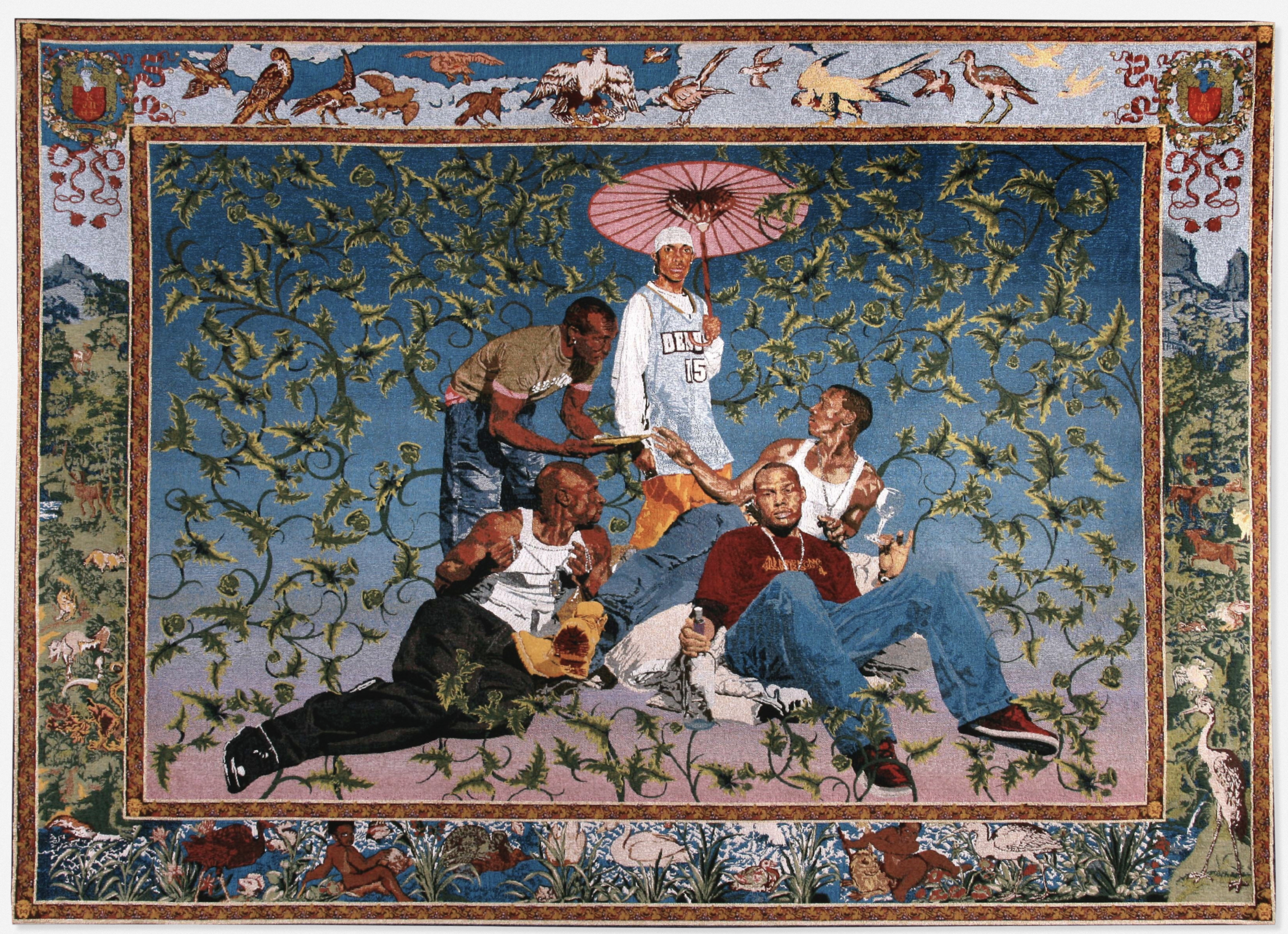
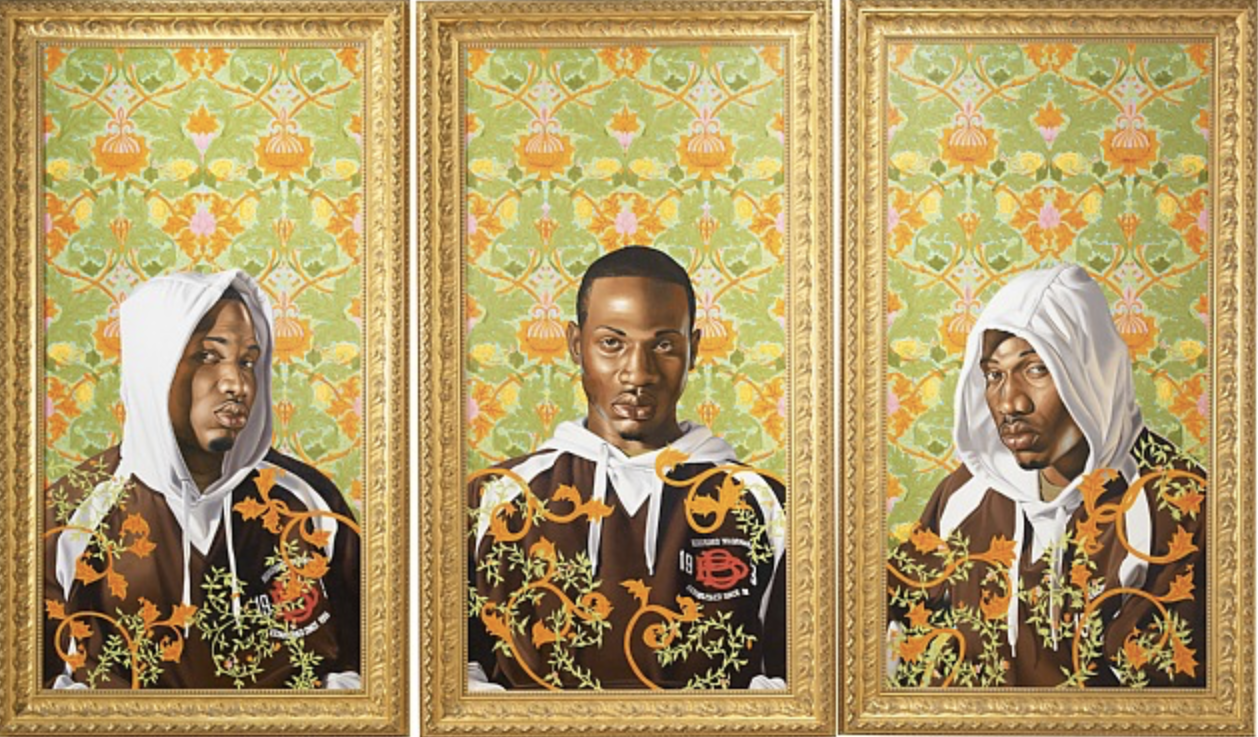
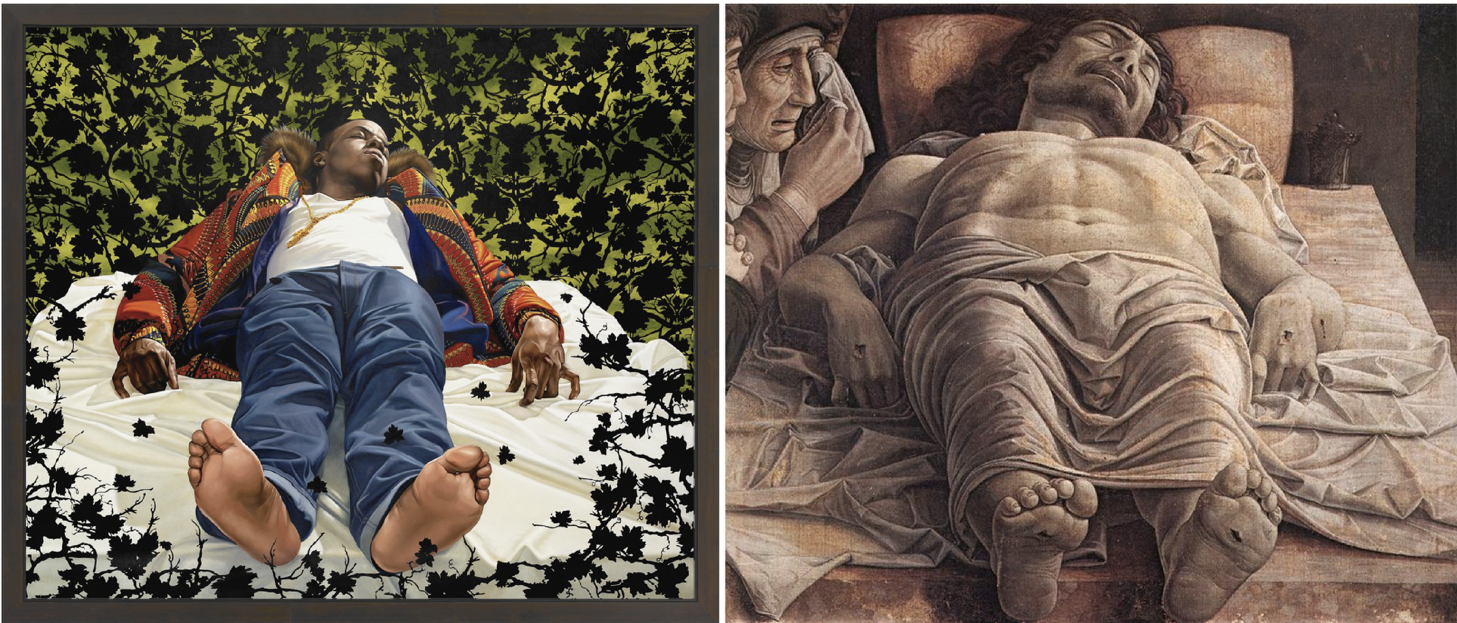
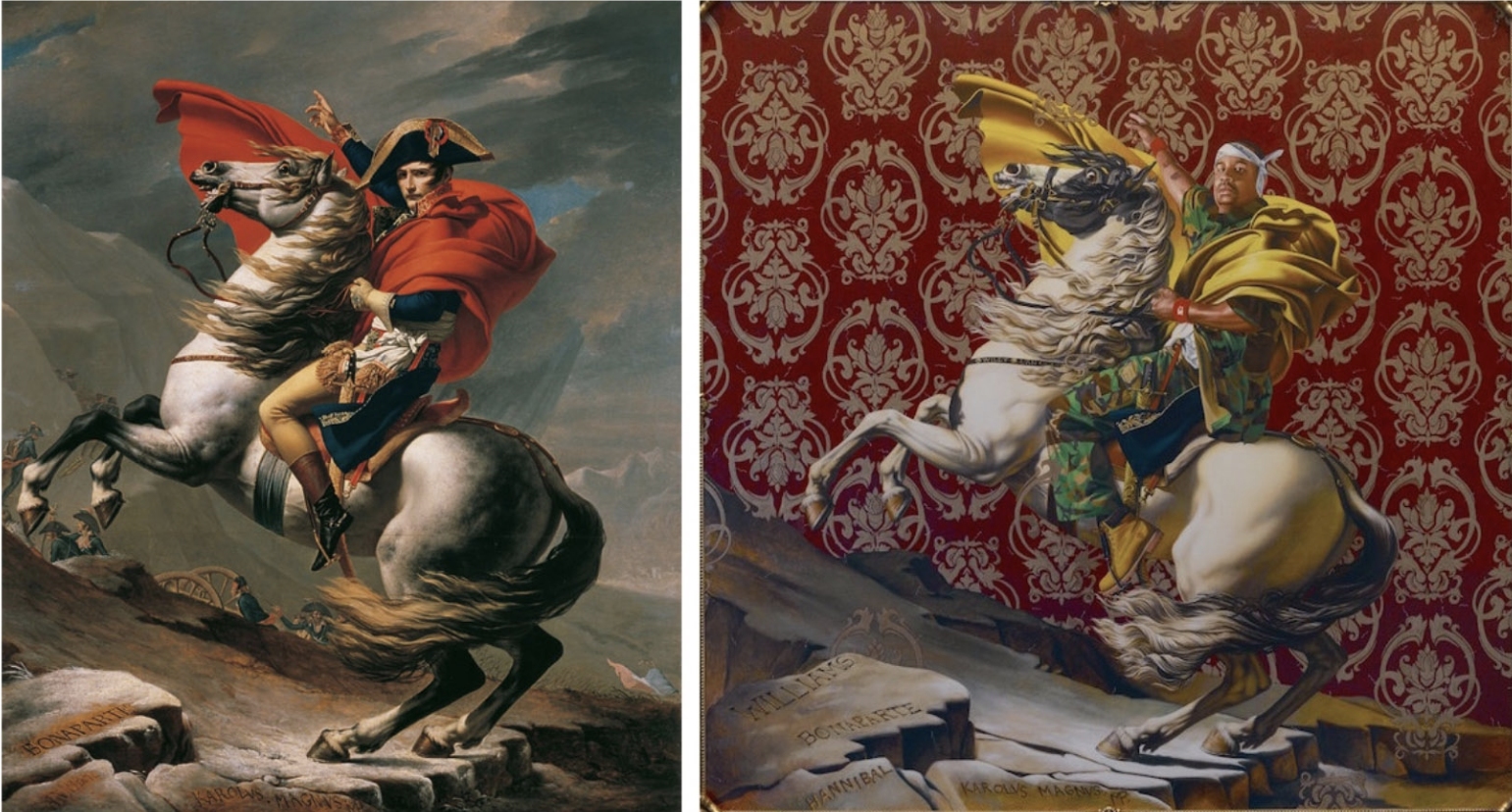
Kehinde Wiley uses Old Master paintings as models but transposed young Black men as heroic subjects wearing contemporary hip-hop clothing. Wiley:” The Triple Portrait of Charles I was a preparatory painting designed to be a stand-in for use in the completion of formal portraits, be they sculptures or large paintings. In this case, three different angles were used to approximate the portrait so that other, more complicated portraits could be made. The 2005 series Rumors of War extended this concept to figures on horseback originally painted by Diego Velázquez and Peter Paul Rubens. Again, Wiley replaced the riders with Black men in athletic jerseys and Timberland boots. Wiley would always render his figures personally, but he hired assistants to paint highly detailed backgrounds with rich patterning. Wiley” The background components are derived from decorative wallpaper elements spanning from the late French Rococo of the 18th century, to the Arts and Crafts movement of the late 19th and early 20th centuries. Independent of period style, I chose elements that connote a sense of pedigree and Europhilia.”